Dream Vacation Destinations

I’m not sure if the wonder is in the photography or the place itself–probably both.  In any case, here’s a tour through some spectacular places around our planet that you might want to add to your list of “someday” vacation destinations.

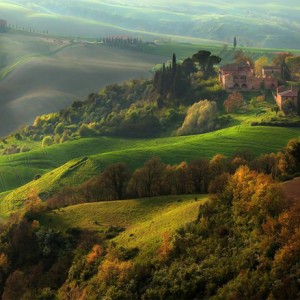
Lucca, Tuscany, Italy

Awa’awapuhi Trail, Kauai, Hawaii

Benteng, Chittorgarh, India

Baatara Gorage Waterfall, Tannourine, Lebanon

Bern, Switzerland

Ben Bulben, County Sligo, Ireland

Aiguill e du midi, Chamonix, France

Devetashkata Cave, Bulgaria

Etretat, Normandy, France

Four Seasons Hotel, Bora Bora

Ice Canyon, Greenland

Gardens of Prague Castle, Czech Republic

Lower Lewis River Falls, Gifford Pinchot National Forest, Washington State

Marble Caves, Chile Chico, Chile

Multnomah Falls, Oregon

Neist Point Isle of Skye, Scotland

Alesund, Norway

Plitvice Lakes, Croatia

Preachers Rock, Preikestolen, Norway

Rice Field Terraces in Yunnan, China

Vernazza, Cinque Terra, Italy

Fjords, Norway

Canal of Leiden, Netherlands frozen over


Shark Island,  Sydney, Australia

Tian Tan Buddha on Lantau Island, Hong Kong

Spirit Island, Magligne Lake, Alberta, Canada

The Gardens at Marqueyssac,Vézac, France

The Pearl Waterfall, Jiuzhaigou Valley, China

Keukenhof Gardens,  Netherlands

Thanks to TheCoolHunter for these images.  Thanks to Jen H. for turning me onto this site.

Click here to explore more at Cool Hunter.

Architectural Oddities

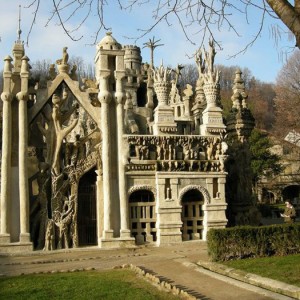
THE IDEAL PALACE

Ferdinan Cheval was delivering mail in April, 1879.  He tripped on a stone and  inspired by its shape, he started collecting stones.   For the next 33 years, Cheval carried stones from his delivery rounds and at home used them to build his Palais idéal, the Ideal Palace. First he carried the stones in his pockets, then a basket and eventually a wheelbarrow.

Cheval spent the first two decades building the outer walls. The Palace is a mix of different styles with inspirations from the Bible to Hindu mythology.  The stones are bound together with lime, mortar and cement. Cheval also wanted to be buried in his palace. However, since that is illegal in France, he proceeded to spend eight more years building a mausoleum for himself in the cemetery of Hauterives. Cheval died on August 19, 1924, around a year after he had finished building it, and is buried there.

For more info and photos go to oddity.

ELEPHANTE

Everything in Eliphante, a property in Cornville, AZ, USA is made from found materials.  The three acre site was created over 28 years by Michael Kahn and his wife, Leda Livant and includes a  residence, Hippodome, which has 25-foot ceilings and incorporates rocks and scraps from construction sites and a studio, one wall of which is the Ford pickup that brought the couple west.

Hippodome has electricity, heat, a phone line and water, but no bathroom or toilet. To wash, one goes across the property to the bathhouse, where the solar-heated shower is a length of chopped hose but the windows are stained glass.

Hippodome

Ceiling fan

The kitchen

For more info on Elephante follow this link to the New York Times.

The Mushroom House, Cincinnati, Ohio, USA

Another unique home made with found and used materials of wood, glass, tiles, and shells selected to make the building “look like it belonged in nature.  Terry Brown spent over 14 years building this home with the help of his architecture students.

The Ryugyong Hotel in Pyongyang, North Korea

NO, THIS IS NOT PHOTOSHOPPED.

This monstrosity is a testament to North Korea’s bizarre totalitarian leadership.  Construction began in 1987 and was designed to be 105 stories, have 3000 rooms, 7 revolving restaurants, casinos, nightclubs and Japanese lounges.  Originally scheduled to be completed in 1989, by 1992 construction was completely halted due to funding problems amid electricity shortages and famine.
Japanese newspapers estimated the cost was US $750 million, consuming 2% of North Korea’s GDP.

Even more strange,  the North Korean government denied the building’s existence for many years!  Though mocked-up images of the completed hotel had once appeared on North Korean stamps, the government manipulated official photographs in order to remove the structure, and excluded it from printed maps of Pyongyang.  Imagine denying this!

Stone House-Guimarães,Portugal

The Crooked House-Sopot, Poland

Low impact woodland house                     (Wales, UK)

Boeing-727 house in Benoit,Mississippi

This house cost Joanne Ussary $2,000, cost $4,000 to move and $24,000 to renovate.  The stairs open with a garage door remote and one of the bathrooms is still intact.  Check out the jacuzzi in the cockpit.

Bird Island Zero Energy Home (Kuala-Lumpur)


Cob-House-Vancouver-Canada

Cubic Houses (Kubus-woningen) Rotterdam, Netherlands

Earth house Dietikon Switzerland

Forest Spiral, Darmstadt, Germany

The Church of Hallgrimur Reykjavik, Iceland

The Piano House, Huainan, China

The old Mill House in Vernon, France

Cactus House Rotterdamn, The Netherlands

Dar al hajar house, Wadi Dhahr, Yemen

A House in a maze, Cordes sur Ciel, France

Hang Nga Guesthouse a.k.a Crazy House, Vietnam

Kansas City Library, Missouri

Lotus  Temple, Delhi,  India

Olympic Stadium Montreal, Canada

Shoe house Abel Erasmus Pass, Branddraai, Mpumalanga South-Africa

Spaceship house , Chattanooga , Tennessee

The Basket Building, Ohio, USA

Thomas Point Lighthouse, Maryland, USA

Guggenheim Museum, Bilbao, Spain

The National Library, Minsk, Belarus

Okinawa tree house at entrance to Onoyama Park

House Attack Viena, Austria

Outdoor sculpture at the Museum Moderner Kunst

For more details about many of these buildings go to weburbanist.

Thanks to Claire Elizabeth for inspiring this post.

Buddhist Monastery Engineering Marvels
Ancient Buddhists in the East seem dedicated to constructing engineering feats.

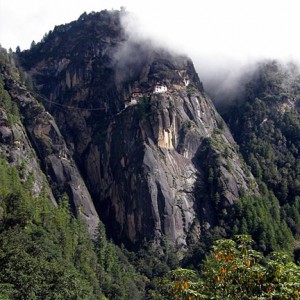
Let’s start with the Tiger’s Nest Monastery in Bhutan.

This temple complex was first built in 1692, around a cave where a revered  Guru Padmansambhanva is said to have meditated for three months in the 8th century.  Padmasambhava is credited with introducing Buddhism to Bhutan.

The monastery buildings consist of four main temples and residential shelters designed by adapting to the rock (granite) ledges and eight caves.  All the buildings are interconnected through steps and stairways made in rocks. There are a few rickety wooden bridges along the paths and stairways also to cross over. The temple at the highest level has a frieze of Buddha. Each building has a balcony, which provides lovely views of the scenic Paro valley down below.

Special permission is required for non-Bhutanese to visit the monastery, usually granted only to practicing Buddhists on a religous retreat.

Young monk peeks out of temple.

Next is The Hanging Temple or Hanging Monastery in China.


Built into a cliff (75 m or 246 ft above the ground) in Shanxi province , the Hanging Monastery was built more than 1,500 years ago.

The temple was constructed by drilling holes into the cliff side and inserting crossbeams halfway to serve as the foundation.  How did they do this 1,500 years ago?

If you look carefully above, you will see somebody walking on this uninviting stairway.

Many thanks to fly_silence@163.com for photos of the Hanging Temple.  If you want to see a video with music of these photos go here.

Next up:  Popa Taungkalat monastery in Myanmar, formerly Burma.

Rising to 2,417 feet (737 meters) from the flat, surrounding plain, the Mt Popa Taugnkalat Monastery is built on the core of an extinct volcano last active 250000 years ago.  At one time a Buddhist hermit, U Khandi, maintained the stairway of 777 steps to the summit of the pedestal hill named Taung Kalat.  It is said the shrine is home to 37 Nats, or spirits, with statues depicting them at its base.

Above, a close up of the 777 stairs.

Now to central Java in Indonesia, and the 9th-century temple, Borobudur.

The monument comprises six square platforms topped by three circular platforms, and is decorated with 2,672 relief panels and 504 Buddha statues.   A main dome, located at the center of the top platform, is surrounded by 72 Buddha statues seated inside a perforated dome.  Some scholars think that this massive monument is a gigantic textbook of Buddhism. To read this textbook in stone requires a walk of more than two miles.

For more info on Borobudur go here.  And thanks to Sacred Destinations for info and photos.

Back to Myanmar/Burma for Kyaiktiyo Pagoda also known as Golden Rock.

This small pagoda (7.3 metres (24 ft)) built on the top of a granite boulder is covered with gold leaves pasted on by devotees. According to legend, the Golden Rock itself is precariously perched on a strand of the Buddha’s hair. The rock seems to defy gravity, as it perpetually appears to be on the verge of rolling down the hill.

Now Tibet

Location, location, location.

Finally, Tongtian Avenue, in China is a long road cut along side the mountain to the tourist attraction of Tianmenshan.

This  “Avenue”  has exactly 99 turns. Heaven supposedly has 9 palaces.

Thanks to cousin Mike for the link that started this exploration of Buddhist Monastery wonders.